
In April 2026, I travelled through the West Nile region of Uganda to meet organisations working within refugee and host communities. We visited many organisations involved in livelihoods, education, peacebuilding, climate action and community protection.
Before the visit, I knew that community-led organisations were doing important work. What became clearer to me during the journey was how closely their work is connected to the realities of the people around them. Their activities were not separate projects designed around one issue, for example, one organisation might be supporting young people to earn an income, bringing communities together through sport, responding to environmental pressures and helping families access education.
One of our first visits was to Women to Action. The organisation supports vulnerable groups including people with disabilities by helping to renovate houses so that they are safer and more suitable to live in. It also works with young people through activities such as liquid soap making and promotes tree planting and energy-saving cooking methods.
What stayed with me was the breadth of the organisation’s work compared with the resources available to it. The team spoke openly about challenges including transport, limited organisational capacity and not having enough funding to maintain its website. These may appear to be basic operational difficulties, but they directly affect how visible an organisation is and how effectively it can carry out its work.
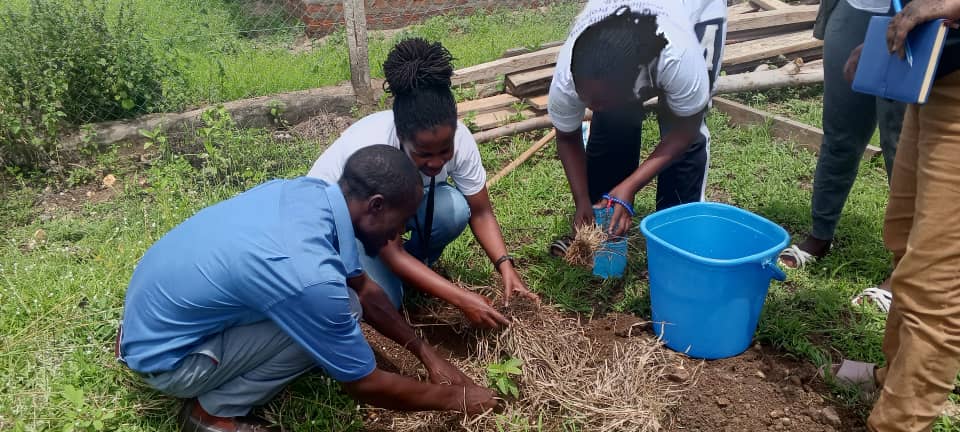
Across the organisations we visited in Bidibidi refugee settlement, I also saw how people were using the materials and opportunities available to them. I learned how community members were transforming damaged saucepans and other discarded materials into useful products. Other organisations were producing cooking briquettes, making energy-saving stoves, establishing kitchen gardens and using waste to make manure.
These activities were not only about environmental protection. They were also ways of reducing household costs, creating livelihoods and responding to the practical pressures communities face.
The visit to The Refugee Voice helped me understand another important part of community-led work. The organisation runs education and digital learning activities, music and video production, skills development and waste-recycling initiatives. It has also developed a free data application for community use.
However, what stood out most was not the number of activities. It was the explanation that the work is based on recommendations from community members rather than decisions made only by the organisation’s staff. This showed me that community leadership is not simply about an organisation being locally based. It is also about how priorities are identified and who has influence over the decisions being made.
Sport was another recurring part of the work. Organisations including MICPAD, Afri Youth Network and YENC use football and other activities to bring young people together, support peacebuilding and strengthen relationships within communities. Before this visit, it might have been easy to see sport as separate from more formal development work but during my visits, I saw how it can provide an accessible way for young people to meet, participate and discuss issues affecting them.
We also met organisations creating access to skills and information in Imvepi and Omugo refugee settlements. RHTV provides computer training, job-seeking support, smart-farming knowledge and free internet access. DILA teaches basic office applications and life skills. YETA combines computer training, tailoring, savings groups and sub-granting to smaller community organisations.
These examples helped me see that access to technology is not only about owning a computer or having an internet connection. It can affect whether someone can search for employment, learn a skill, access information or connect with opportunities beyond their immediate location.
Savings groups appeared in many of the organisations we visited. At first, it could seem repetitive to hear about savings groups in one organisation after another. However, their repeated presence showed how important they are where people have limited access to formal financial services. They allow members to save small amounts, support one another and invest in household or business activities.
The visit also showed the difficult balance these organisations are managing. They are responding to immediate community needs while trying to build longer-term opportunities. They are supporting people with disabilities, older people, women, children and young people, while also working on farming, education, peacebuilding and environmental protection.
Yet many are operating with limited equipment, unreliable transport and very little flexible funding. These are not minor administrative problems. A lack of transport can prevent an organisation from delivering stoves or reaching communities. A lack of resources and capacity can limit the number of young people an organisation is able to train. Limited funding can mean that an organisation has strong ideas but cannot develop or expand them.
I left West Nile with a stronger understanding of community-led change. It is not defined only by the activities an organisation delivers. It can be seen in how closely those activities respond to everyday realities, how community members shape priorities and how organisations connect issues that are often treated separately.
The visit also reminded me that community-led organisations should not be recognised only for continuing to work with limited resources. Their knowledge, relationships and ideas should be properly valued and resourced. They are already creating solutions. The question is whether the wider funding and development system is prepared to take their leadership seriously.
Leave a Reply