
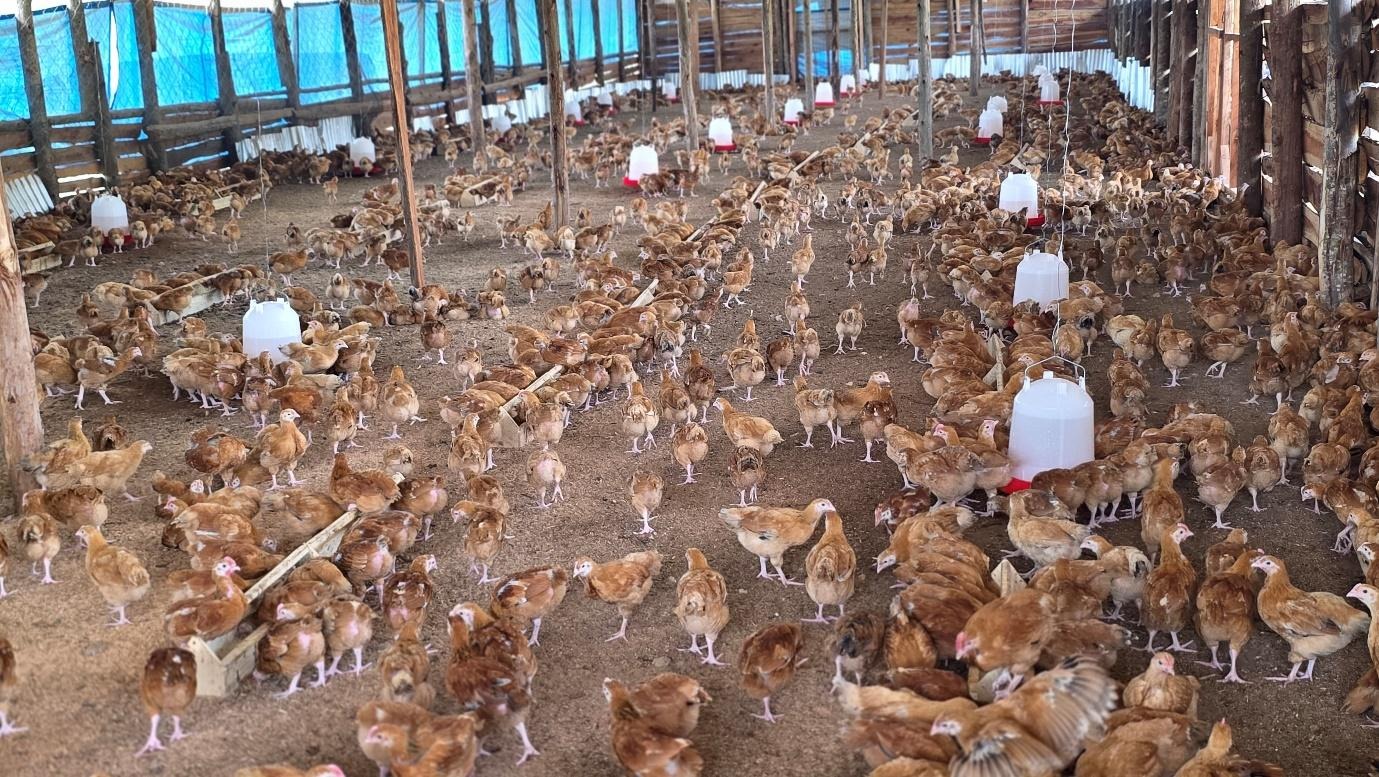
I didn’t expect to be caught off guard by chickens. Yet standing at TuVi Poultry house in Rwamwanja refugee settlement recently, in South Western Uganda, I found myself staring at 2,500 restless birds and realising that the way I had been thinking about humanitarian aid might be wrong.
For years, I have worked around refugee settlements in Uganda. I know the language by heart: vulnerability, needs assessment, beneficiaries, funding gaps. I have repeated those words myself, sometimes with conviction, sometimes with fatigue. But in that poultry house, another word pressed itself forward: possibility.
Masengesho, a refugee entrepreneur and operations manager at TuVi, was already looking beyond the birds in front of us. “These 2,000 will not be enough,” he said. “We are in touch with the market. We need more investment to expand.” He wasn’t asking for another grant or training. He was talking about demand, jobs, and growth. He wanted Tomorrow Vijana, the refugee-led group he helps lead, to show others what was possible beyond aid dependency.
I felt a pang of doubt. For years, I have been better at criticising humanitarian systems than imagining alternatives. In a previous piece, I even asked: What if we stopped aid altogether? Whereas in that previous piece, my criticism of humanitarian aid might have came through strongly, I hadn’t provided much to an imagination of what alternative models might take centre stage in absence of the conventional humanitarian aid as we have known it for long. This time, TuVi offered a clue. The partnership combines Tomorrow Vijana’s community ties and poultry farming expertise with Turaco Valley Foods’ financial and administrative infrastructure, including feed from its milling operation. Cohere provided land; one of the most persistent constraints for refugee enterprise. Together, they are testing whether a refugee-led organisation can be more than a recipient, and instead become a commercial partner.
The turning point for me was not just the chickens, but the land. Masengesho spoke with gratitude about Cohere’s contribution in terms of the land that was available to them, but what struck me was how he saw beyond the soil itself: the opportunities that this joint venture could potentially unlock.
For years, I had thought about humanitarian financing mainly in terms of being locally led and flexible. But perhaps the real question is how resources can unlock the productive capacity already present in displaced communities.
That could mean patient capital instead of short grant cycles. Land access instead of endless training. Joint ventures instead of project delivery. Market connections instead of workshops. And policies that allow refugees to participate fully in local economies.
I am not suggesting enterprise replaces humanitarian aid. Acute vulnerability does require food, healthcare, and protection interventions. Not every refugee is an entrepreneur But perhaps there is a middle ground: humanitarian action that creates conditions for agency rather than becoming the permanent architecture of refugee life.
I have seen glimpses elsewhere. Bemeriki of Rwamwanja Rural Foundation, experiments with Black Soldier Flies for animal feed and the last time I interacted with him, he informed me that demand already is outpacing supply. In Kyaka Refugee Settlement, Solomon produces briquettes from waste for household cooking and he also insisted that current demand outpaces his supply capacity. He had orders from as far as Nairobi. Fragile though they are, these enterprises reveal a dynamic economic life often obscured by humanitarian narratives.
When funding declines, we ask what will be lost; rations, services, jobs. Perhaps we should also ask what could be unlocked if resources addressed barriers to refugee enterprise. The future may not lie in one grand alternative to humanitarianism, but in thousands of smaller experiments: a piece of land made available, equity trusted to refugee-led groups, patient capital willing to take a longer view, a private business prepared to share risk, a government opening economic space, a market connection made, and an entrepreneur given room to grow.
Maybe that is what enduring agency looks like.
And so, I went to TuVi Poultry expecting to see chickens but ended up wondering as I left, what else we have been standing beside all along, without quite knowing how to see it.
What if the question is no longer how much aid refugees need, but what becomes possible when we invest in the agency that already exists?
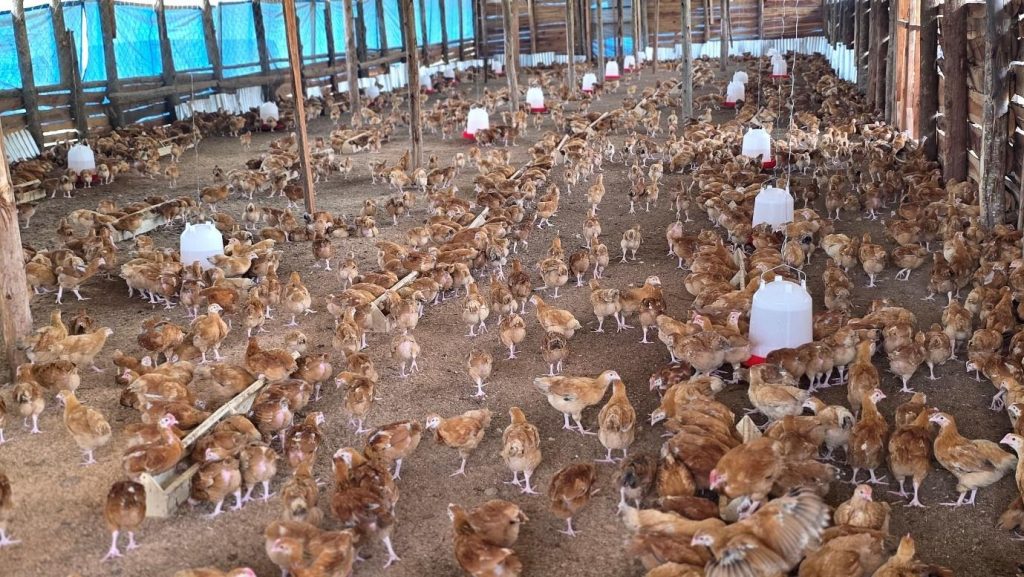
A photo of chicken at TuVi Poultry house, in Rwamwanja, South Western Uganda, taken in August, 2026 by Masengesho.
Leave a Reply