
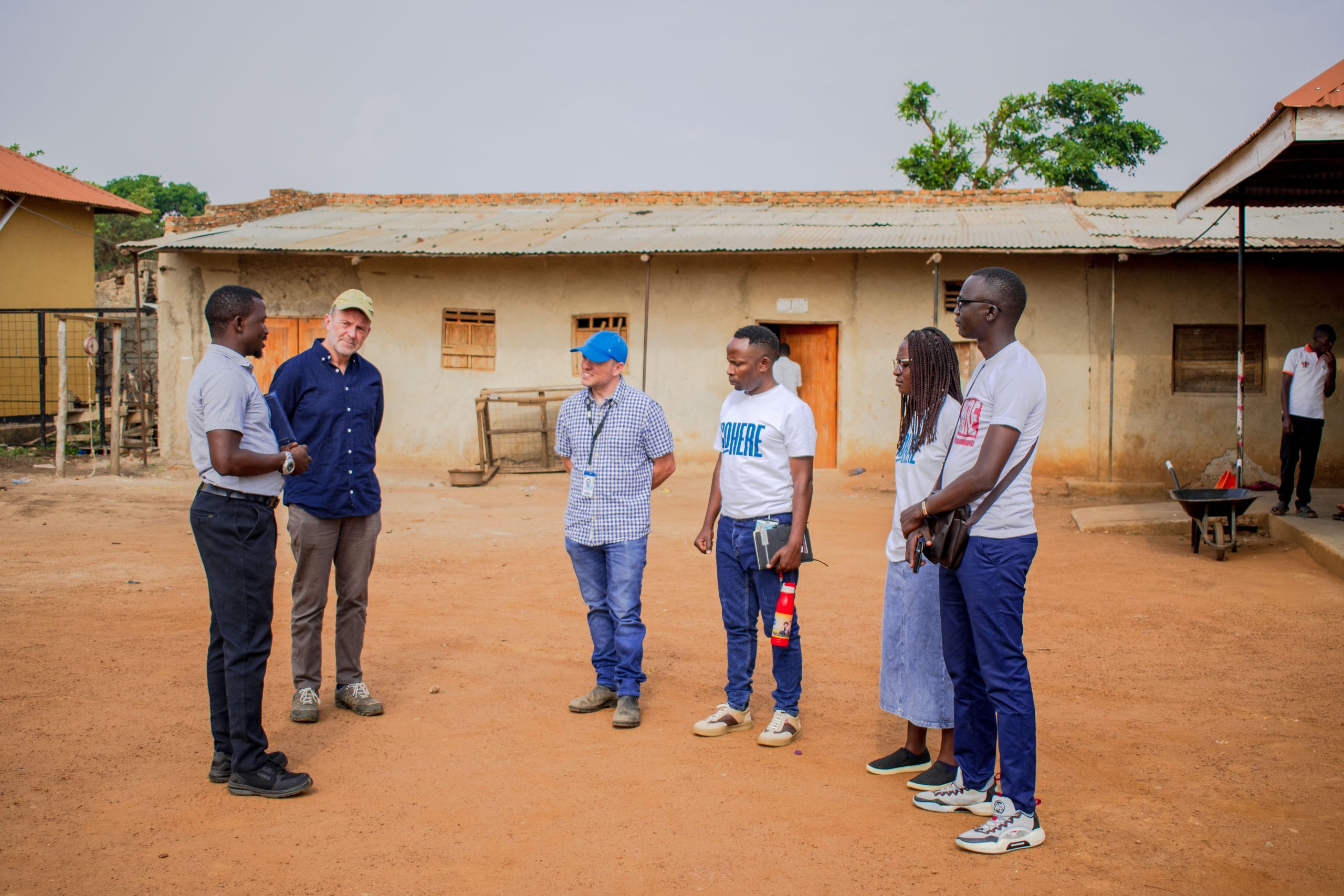
In December 2025 I spent five days in Geneva talking to refugee advocates, donors, intermediary organisations and others about funding refugee leadership. Cohere has been able to channel funding to over 100 refugee led organisations in the last decade and it is often assumed that Cohere’s goal is to get as much funding to refugee leaders as possible. This isn’t actually the case. In fact our priority is to build trust based relationships with those most affected by forced displacement and being an ally to the changes that they want to see. As such our only company goal is to learn how to do this in the best and most appropriate way possible, even if channelling funds continues to be an appropriate role we can play. My colleague, Ruth, who was also in Geneva, has written this insightful piece on how framing success in terms of how to get as much funding as possible to refugee leaders ends up being exclusionary.
Allies to refugee leaders hear the appeal that access to significantly more resources would enable refugees to take control of their community’s development. We see the resources under the control of a small number of institutional donors over 80% originating from 20 OECD state budgets. It is tempting to take on the role of a broker, suggesting to refugee leaders that by making some tweaks to their negotiating position they could meet donors in the middle and access large sums of cash. I heard this suggestion being made in no uncertain terms in Geneva to refugee leaders.
” Refugee leaders do have power and leverage, but their bargaining position is undermined by hierarchies that are intentionally designed to exclude them. “
To add to Ruth’s points on this being an exclusionary framing, convincing refugee leaders to make compromises puts them in a difficult, and potentially harmful position. Refugee communities may and do choose to compromise but that should be under no duress, implicit or explicit, from allies.
When refugee leaders are negotiating with other actors, their interlocutor most likely is a representative of a power structure that is already limiting refugee freedoms. They are likely to be donors, aid agencies, multilaterals or governing institutions. Refugee leaders do have power and leverage, but their bargaining position is undermined by hierarchies that are intentionally designed to exclude them. There is the eternal dilemma of confronting this head-on versus patiently navigating the systems that exist so as to eke out greater rights and freedoms for their community.
People used to balk at this concern because they had bought the line that donor states really centred their aid strategies on vulnerable people, as opposed to being a tool to promote their own national interests. This was before leaders like Boris Johnson more brazenly stated that British Aid would not be a “giant cashpoint in the sky” and would be refocused to align with British interests, or before the Trump administration offered aid to the DR Congo government in return for “preferential access” to minerals. It was before weapons manufactured in the UK were found in Sudan being used by the Rapid Support Forces, a paramiltary force that has been accused of crimes against humanity, including genocide. The UK has provided over £100 million per year to Sudan as aid since the start of the war, while the licences for UK arms companies to sell arms to UAE, the country likely to be shipping weapons to the RSF, amount to far higher totals.
Here’s why.
When refugees are forcibly displaced they have to make compromises – an obvious understatement. They have to give up on the lives they have built and the homes they have always known and start a new life, knowing that their rights and freedoms will be curtailed, often indefinitely. In the majority of cases, they are choosing to live under the jurisdiction of a state that has played some kind of a role in enabling or even causing their displacement. They are at the mercy of a global hegemony that decides how much aid they receive and when, and has a strong say in the amount of freedoms they are going to be entitled to.
Recommending to refugee leaders, being among those who have paid the highest price of this geopolitical game-play, that they compromise with these global powers means aiming for a continuation of the existing imbalances and injustices. It means ignoring the excessive compromises refugee communities have already made. Refugee leaders themselves may reluctantly choose to continue making compromises that effect a continuation of oppression, for the sake of marginal gains. Allies, instead of encouraging compromise – thereby taking the side of hegemony and injustice, should instead be shining the light on the power imbalances that mean the negotiations are not being conducted on fair terms.

Leave a Reply