
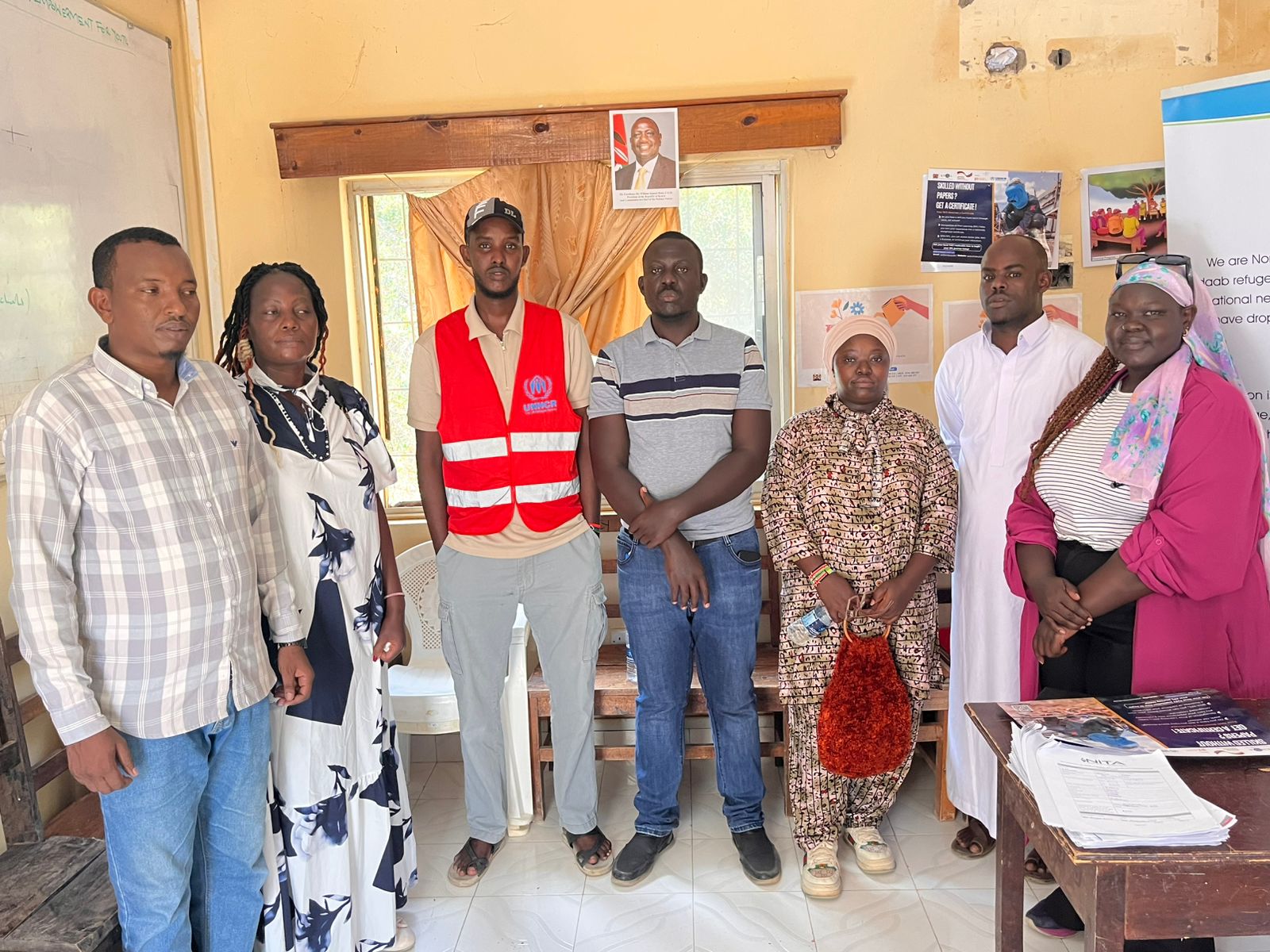
The question was simple, disarming even. It was our last day in Dadaab after being here for 11 days, spending time with the RLO leaders, listening about their work, their priorities, challenges, and overall telling us about their communities. This was the last field visit; we had just finished introductions on both organisations. There was laughter, polite conversations, the usual rhythms of a ‘field visit.’
Then one leader leaned in and asked, ‘So Adior, with the visits that you’ve had, what do you plan to do? Are you just going to go back and write your reports? ’Silence filled the room, and with the hot temperatures of 38 degrees in Dadaab, I felt a cool breeze pass between us. I paused, because the honest answer, the answer he already knew, was that is what usually happens.
In the humanitarian sector, listening is often framed as a virtue. Consultations, focus group discussions, validation workshops, participatory assessment, you name it, we have an entire vocabulary for how to describe our type of ‘inclusion’. But for many refugee communities, these processes feel less like participation and more like knowledge extraction. We (humanitarians) come in to ask our questions, they tell us what their struggles are and then we leave. The output is more often than not a report that they will never be privy to.
What remains behind is not transformation, it is fatigue.
Fatigue from repeating the same stories. Fatigue from explaining their solutions (that are almost never resourced as a result), and fatigue from having their knowledge harvested but never credited.
His question was very valid in every way and sense. It named a pattern that communities have learned and recognised long before outsiders do.
Reports are valuable for providing evidence that shapes policy, supports funding, and serve many other important purposes. But from his question, it felt more like a transfer of knowledge, a tired cycle of storytelling and continued repetition of the challenges they face without support. And if I were in his shoes i would be tired too, because what is the point? Who will benefit from this knowledge?
I believe that one of the deepest misunderstandings about refugee-led organisations, even now in 2026, is that they are a source of insights rather than actors of change. They are not simply bystanders or observers. RLOs are not there to give community perspectives, validate external program design or supply lived-experience narratives. They are already running schools like Light Academy in Kaloboyei by KALOBEYEI INITIATIVE FOR BETTER or Christ Victory Centre in Nairobi, they are designing livelihood initiatives with almost no funding and finding ways to stand together as a community. Yet, they remain underfunded, consulted but not trusted, visible but not resourced.
That simple question, Are you just going to write another report? Was not just a question but a recognition of a lack of trust and if the engagement we had with them would lead to anything. That moment forced me to reconsider how I/we engage with leaders because it can not be an event, it must be an intention. Too often, our interactions are structured like meetings with an agenda, and by the end of that time, if we are honest, many of these interactions inform our work but not theirs.
When engagement is intentional, it begins from a different place, a relationship, ,not a requirement. Asking ourselves, are we coming to listen in order to act? Are we prepared to stay in relationship beyond our visit? Or are we open to being shaped by what we hear? Because when relationships are built with care, we begin to interact differently, that transactional engagement never can. Trust grows, priorities are clear, and sometimes, most importantly, they can lead to funding that is responsive rather than prescriptive. And if our visit meant anything, then it would be that we need to do more and spend more time with the community because they notice who returns and who will disappear after gaining what they wanted or, as he said, after publishing that ‘report’.
I did not answer the leader immediately, because the most honest response was not a promise, but something I could only show him through my actions.
Leave a Reply