
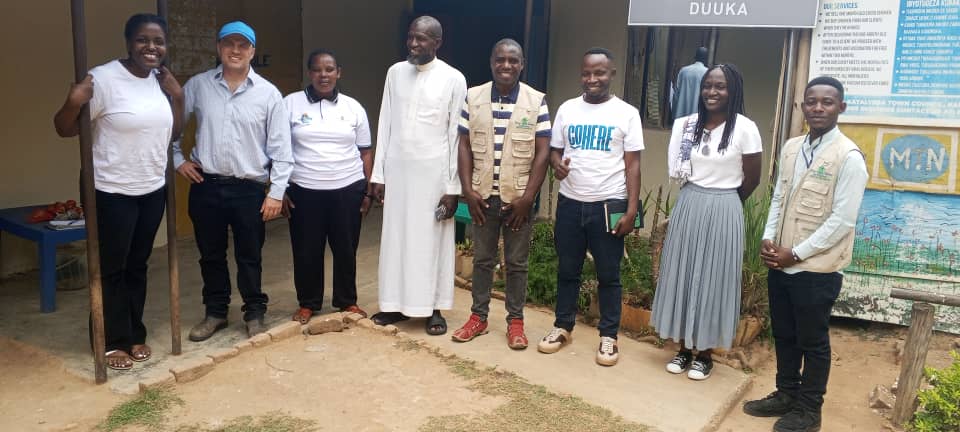
Recently, we spent time in Rwamwanja Refugee Settlement in South Western Uganda, learning from Abuba, the founder of Ignite Hope Initiative; a grassroots refugee-led organisation operating in Mahani Zone. What we encountered through Abuba’s story is not just a local response to a funding crisis, but a quiet re-writing of how education, ownership, and leadership can function in displacement settings.
Abuba is an entrepreneur by practice and a community organiser by conviction. He runs poultry enterprises, a retail shop, and sells poultry feeds. But what defines his work is how he reinvests his profits. Part of his income goes into supporting the most vulnerable members of his community; particularly elderly single people and the chronically sick who have no one to escort them to hospital. He identifies caregivers, pays them, and ensures dignity where systems have fallen short.
He is also deeply invested in social cohesion. In a settlement shaped by the scars of ethnic conflict from eastern DR Congo, Abuba spends his time convening community dialogues on peaceful coexistence. As he told us during one candid conversation:
“Peaceful coexistence must be accompanied by something to eat. When people have food and are satisfied, they are less likely to engage in wrangles.”
This belief is practical, not poetic. He supports vulnerable families with chicks to rear—creating income and food security while strengthening community ties.
The Day the Schools Closed
When we asked Abuba about what has happened in Rwamwanja following the scaling down and departure of most INGOs implementing education programmes, his expression shifted. The changes triggered by donor aid cuts; including the suspension of USAID and other key funding streams; has been devastating.
Out of 23 Early Childhood Development (ECD) centres previously supported by INGOs in the settlement:
- Only 3 remain under INGO support
- 5 were handed over to government
- 15 were simply abandoned
Parents were told not to bring their children back.
Abuba paused, then asked us quietly:
“Where do you think the children from those 15 ECD centres will go?”
We had no answer for him.
From Abandonment to Community Ownership
Before this crisis, Abuba had already been running a small makeshift ECD centre for about 30 children who had been left out of the system. He paid teachers from his own business income. Recently, however, government inspectors shut the centre down for failing to meet minimum standards. Yet, recognising his commitment, they offered him an unexpected option: to take over abandoned ECD infrastructure previously run by INGOs.
No funding came with the offer. No salaries. No operational budgets. Just permission to use the buildings.
Abuba was conflicted. On one hand, this was long-overdue recognition that refugee-led organisations could manage essential services. On the other, Ignite Hope Initiative quite simply, did not have the resources INGOs once had.
So he did something radically simple: he turned to parents.
Together, Abuba, his colleagues, and refugee parents agreed on a community-owned model:
- Parents would contribute meals, cleaning, and labour
- Volunteer teaching would be provided where possible
- Ignite Hope Initiative would mobilise resources from its economic activities to supplement teacher stipends and essential costs
Through this approach, three ECD centres have already been reopened; without donor money, per diems, or logframes.
Why Refugees Were Never Made Co-Owners
On a previous visit, we had asked Abuba why refugee-led organisations were never meaningfully involved in managing ECD centres when donor money was still flowing. His response was blunt:
“They don’t want to see refugees as actors. They want us to remain beneficiaries. That’s how they justify their roles and salaries to donors.”
Now, with funding gone, the schools were left to whoever was willing to care enough to keep them alive.
Someone from the team later joked; half in laughter, half in deep distain; that many INGOs didn’t come to save refugees; they came to save their salaries. It was uncomfortable, but it should force us to reflect inward as well: are we truly shifting power, or just softening the same old model?
A Different Kind of Support
Ignite Hope Initiative previously received unrestricted, flexible funding from Global Wholebeing Fund in 2025 via Cohere. In 2026, thanks to a similar flexible grant from the IKEA Foundation, Cohere will be intentionally working through our “Trust Circles”, to deepen trust-based relationships that put frontline refugee leaders like Abuba, in charge—rather than reproducing top-down, donor-centric, logframed approaches that collapse the moment funding ends.
This support is not about replacing INGOs. It is about re-centering ownership, decision-making, and accountability where they belong: with communities themselves.
Standing With Abuba and the Community
If you believe refugee communities should not be treated as passive recipients—but as innovators, managers, and owners of their futures—there is space to act.
You can:
- Volunteer
- Support the economic activities of Ignite Hope Initiative
- Help Abuba and his community reopen the remaining 12 closed ECD centres in Rwamwanja in whichever way you can.
Please reach out to Cohere.
The short-term consequences of this funding withdrawal are severe. But if this transition is handled with humility and trust, it could mark a long-overdue return of schools; and power; to their rightful owners: the community!
Leave a Reply