
A question has been nagging at me for a week now… and it keeps coming up whenever I talk about trust-based relationships and our approach at Cohere.
When I present our work and our model, I’m often asked similar questions:
“How sure are you that RLOs will use grants correctly?”
“A refugee-led organisation can exist today and disappear tomorrow.”
“There should be criteria.”
“We don’t even know these RLOs; they are hidden.”
And every time, I pause and wonder, what exactly are we measuring when we say “impact”?
My answer has always been simple, even if uncomfortable for some:
Is there any law or criteria that has ever fully stopped a human being from doing wrong? Or is it something deeper? Integrity, humanity or shared values that make us responsible for how we act?
Again, why do we need so many criteria? Is it because we are biased in who we choose to trust?
And each time, I stop and ask myself, with what exactly are we measuring when we talk about “impact”?
Why do we need so many criteria? Is it because we are influenced by our prejudices about the people we trust?
Sometimes it feels like we only trust what is visible, what makes noise, what is loud, what is surrounded by big cars and heavy jackets. And I am not saying visibility is bad. But I keep asking myself, at what cost?
Should impact be defined by how visible the final result is to donors and systems, or by what truly changes in the lives of the communities we serve?
And more importantly, who is actually satisfied at the end of it all?
The community… or the systems that need logos and reports to feel assured of “impact”? Another thing to consider is how do we bring in those who are still most marginalised? Whose voices are still left outside the room?
And how do we ensure that everyone is not just invited to the table, but also truly heard once they sit there? And above all, who is truly satisfied in the end? And how do we guarantee that everyone is not only invited to the negotiating table, but also truly heard once they are?
As the French saying goes, “Quitte la table quand le respect n’est pas servi.”
Meaning, leave the table when respect is no longer being served. Sometimes, you may be given a seat at the table, but not the space to speak. You may be present, yet silenced, invited, yet made to feel like you don’t fully belong.
This brings me back to something I deeply believe:
Capacity should never be a barrier to participation because human beings are capable in different ways.
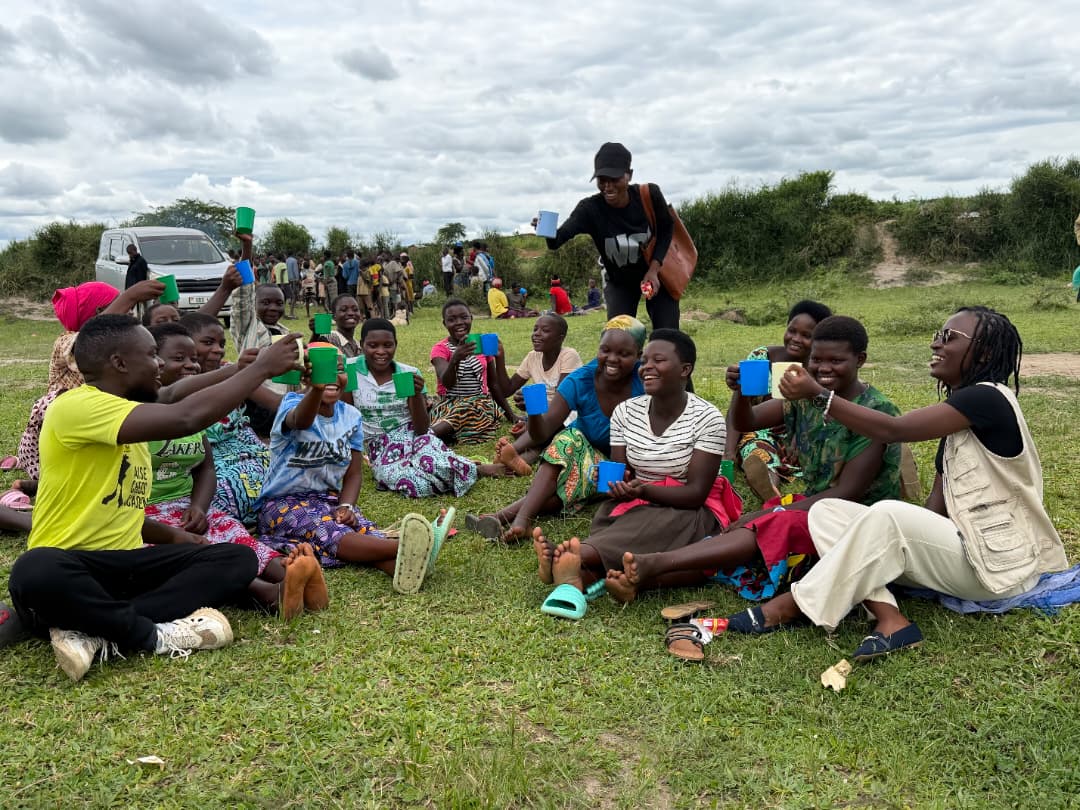
I wish that we- donors, INGOs, NGOs, and Refugee-Led Organisations could come together not as separate systems, but as one humanitarian community, and sit down not just to report, but to truly understand, to listen, learn, and to feel the realities of the people we serve. Perhaps then we would realise that what communities need most is not just funding or visibility but human connection, presence, and genuine listening.
And maybe then we would also understand that RLOs are not “hidden.” They are present. They are working. They are holding systems together in ways that are often unseen. The small grants they receive are not for noise or publicity; they are meant to support real change
I don’t claim to have all the answers to these questions I’ve raised. Far from it. However, I believe that if we continue to listen closely to the voices behind these small scripts, these lived experiences might begin to reflect differently. And perhaps we will each ask ourselves a deeper question:
Who am I, really, in every position I take and every responsibility I hold?


Leave a Reply