
There is a growing sense of optimism around regenerative agriculture in refugee contexts, particularly in places like Rwamwanja, Kyangwali and Kyaka in Southwest Uganda. It is not difficult to see why. After years of grappling with the limitations of short-term aid, of cycles of provision that rarely seem to alter underlying conditions, the idea of regeneration carries with it a certain moral and practical appeal. It suggests not only sustainability, but restoration; not only survival, but renewal. It gestures toward something longer-term that might finally move us beyond the perpetual present tense of humanitarian response.
In Kyaka, a refugee-led organisation called Live in Green has taken this idea further than most externally designed programmes would attempt. Waste is no longer simply disposed of but reorganised into a circular system. Plastic is collected and sold into recycling markets in Kampala, while biowaste is converted into carbonised briquettes for cooking. These briquettes are not a marginal alternative—they compete directly with charcoal on price and performance.
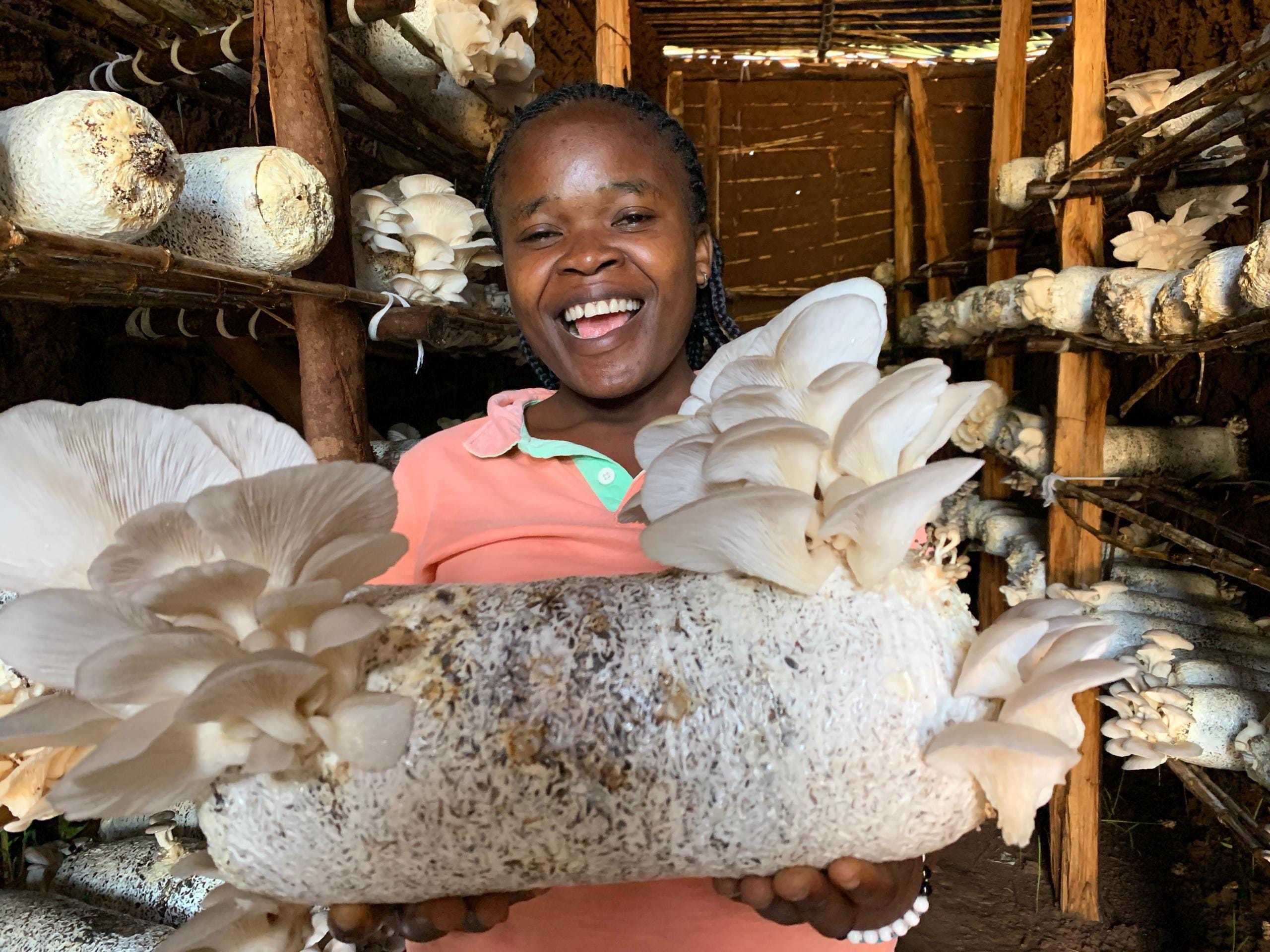
In Southwest Uganda, the Hodari Foundation has catalysed a mushroom-growing ecosystem that now stretches across the region. Mushrooms are grown on maize husks—an agricultural by-product—inside small perforated bags that can be kept within family homes. They require minimal land, grow vertically, and produce continuously for months.
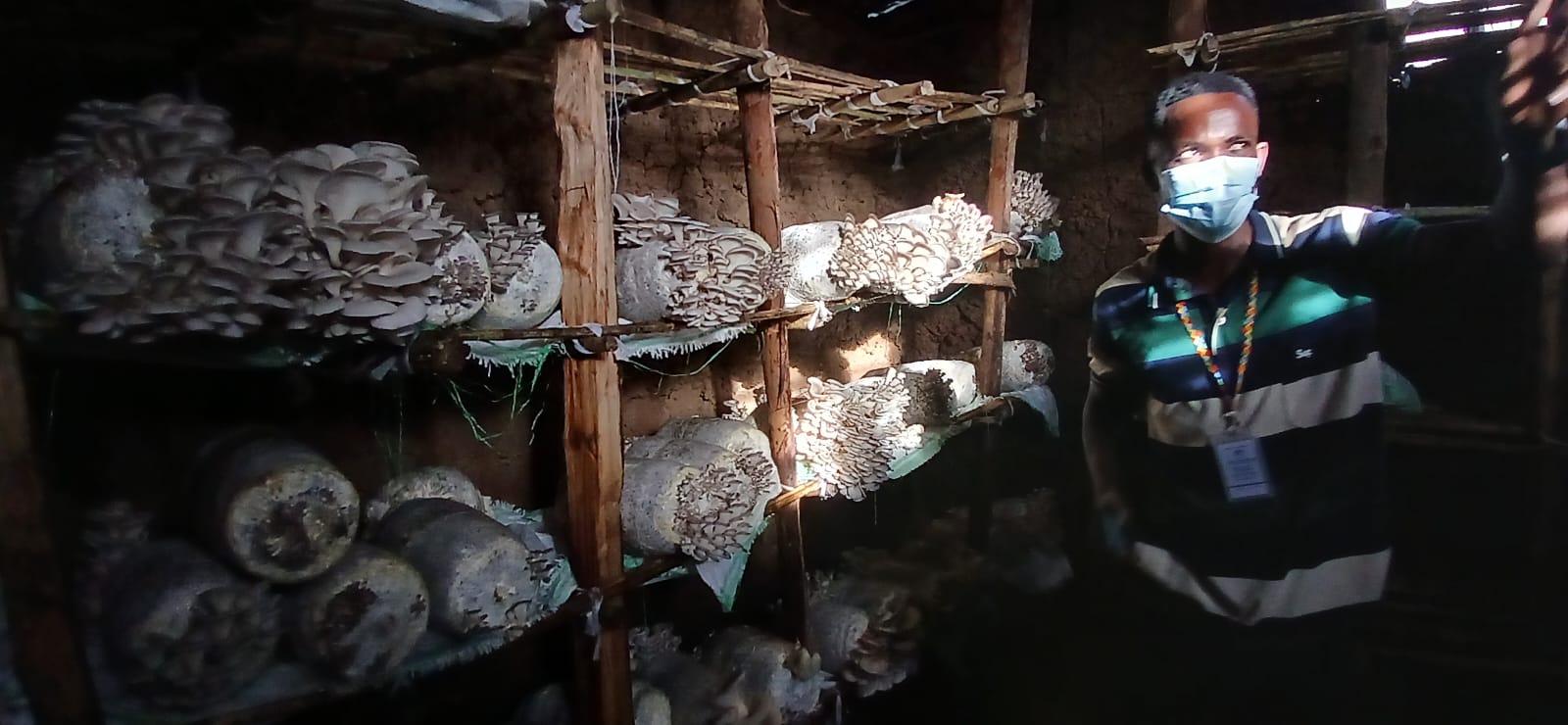
As land allocations for refugee households have steadily decreased, this form of regeneration has not depended on expanding access to land, but on working within its constraints. The result is an industry that now feeds into local markets: fresh mushrooms, dried products, powders, even mushroom-based alternatives to coffee and cosmetics. Waste is transformed into value, but without competing for the limited land available.
Yet, beneath this optimism, there are questions that we rarely allow ourselves to dwell on for long, perhaps because it unsettles the neatness of the solution being proposed. These are not question about techniques or crop yields or soil composition, or the principles and foundations of regenerative agriculture, but something more fundamental:
Who, in these systems, actually has the agency to regenerate?
Who are they regenerating for?
In a refugee context who are the actors in the symbiotic relationship between people and planet?
These questions are pertinent when thinking about something like regenerative agriculture, because regeneration is not simply a technical process. It requires a certain orientation toward the future, a willingness to invest in land over time, to take risks now in the expectation of benefits later. It assumes a degree of continuity, of presence, of belonging. It assumes that those doing the work will, in some meaningful sense, remain connected to the outcomes of that work.
“Who are they regenerating for?“
In many refugee-hosting areas, land is not owned by refugees, and usually cannot be. Access may be granted but it is rarely secure in the long term, and it is rarely accompanied by full decision-making authority. Refugees are hosted, sometimes for decades, but the structure of that hosting is deliberately provisional. They are not, in most cases, permitted to take root in the fullest sense of the word.
So we find ourselves in the position of encouraging long-term ecological thinking within short-term human arrangements. We ask people to invest in soil health, to think about sustainability, to regenerate ecosystems, while at the same time operating within systems that do not guarantee their continued presence on that land, or their control over how it is used. It is not that people are unwilling to engage; it is that the logic does not fully align. Regeneration, in its deeper sense, presumes a relationship to land that is difficult to sustain without some form of ownership or security.
The question, then, is not whether regenerative agriculture is a good idea—it clearly is—but whether the conditions in which it is being promoted are sufficient to support the kind of agency it requires. Without some degree of control over land, or some meaningful participation in decisions about its use, regeneration risks becoming something that is done by refugees, rather than something that is owned by them. It becomes another programme, rather than a shift in power.
The issue is compounded when we consider mobility. In many of these contexts, movement is restricted, formally or informally. Economic opportunities are tied to place, and leaving that place is not always straightforward. This creates a situation in which people are neither free to move nor belong where they are. The space for agency narrows accordingly. If local systems are weak or exclusionary, people cannot easily opt out of them, and if those systems are externally defined, participation within them remains limited.
This is where some of the more familiar language around refugee leadership and localisation begins to feel slightly strained. There is a great deal of talk about shifting power, about inclusion, about putting refugees at the centre of decision-making, and these are important commitments. But they often stop short of addressing the structural conditions that would make such shifts meaningful. It is one thing to invite participation within a system; it is another to allow people to shape that system itself, particularly when key elements—like land and movement—remain outside their control.
None of this is to suggest that we should retreat into a kind of fatalism about the constraints of refugee policy. It is, however, to suggest that we need to be more aware about the conditions under which agency for change can emerge. That includes key partnerships that promote regenerative agriculture, certainly, but it also includes the material and structural factors that allow those partnerships to translate into meaningful influence.
In practice, this might mean that some of the energy currently being put into regenerative agriculture might need to be diverted to supporting refugees in advocating for their right to use the land with more freedom, funding refugee led policy and advocacy work on land and other political rights including naturalisation. It might mean enterprise initiatives that explore shared ownership models so that new-comers can be enfranchised in their stewardship of the land.
For allies to refugee leaders this will have to mean being more and more open-minded about funding a refugee led agenda rather than setting refugee programmes within compartments of “agriculture”, “climate resilience” or “livelihoods”.
It will mean recognising that mobility and land rights—however sensitive it may be politically—is part of the picture, because agency is not only about the ability to act where one is, but also the ability to choose where one might go. When we speak about regeneration without speaking about ownership, or about inclusion without speaking about control, we risk tacitly endorsing the current limitations to the freedoms of refugees.
Regenerative agriculture, has the potential to be part of a more just and sustainable collective response to crisis, but only if it is accompanied by a willingness to engage with the deeper questions it raises. The way I understand it, regenerative agriculture is about the relationship between people and place, both now and into the future. The issue is not simply whether land can be regenerated. It is whether the people working that land are allowed, in any meaningful sense, to belong to it.

Leave a Reply