
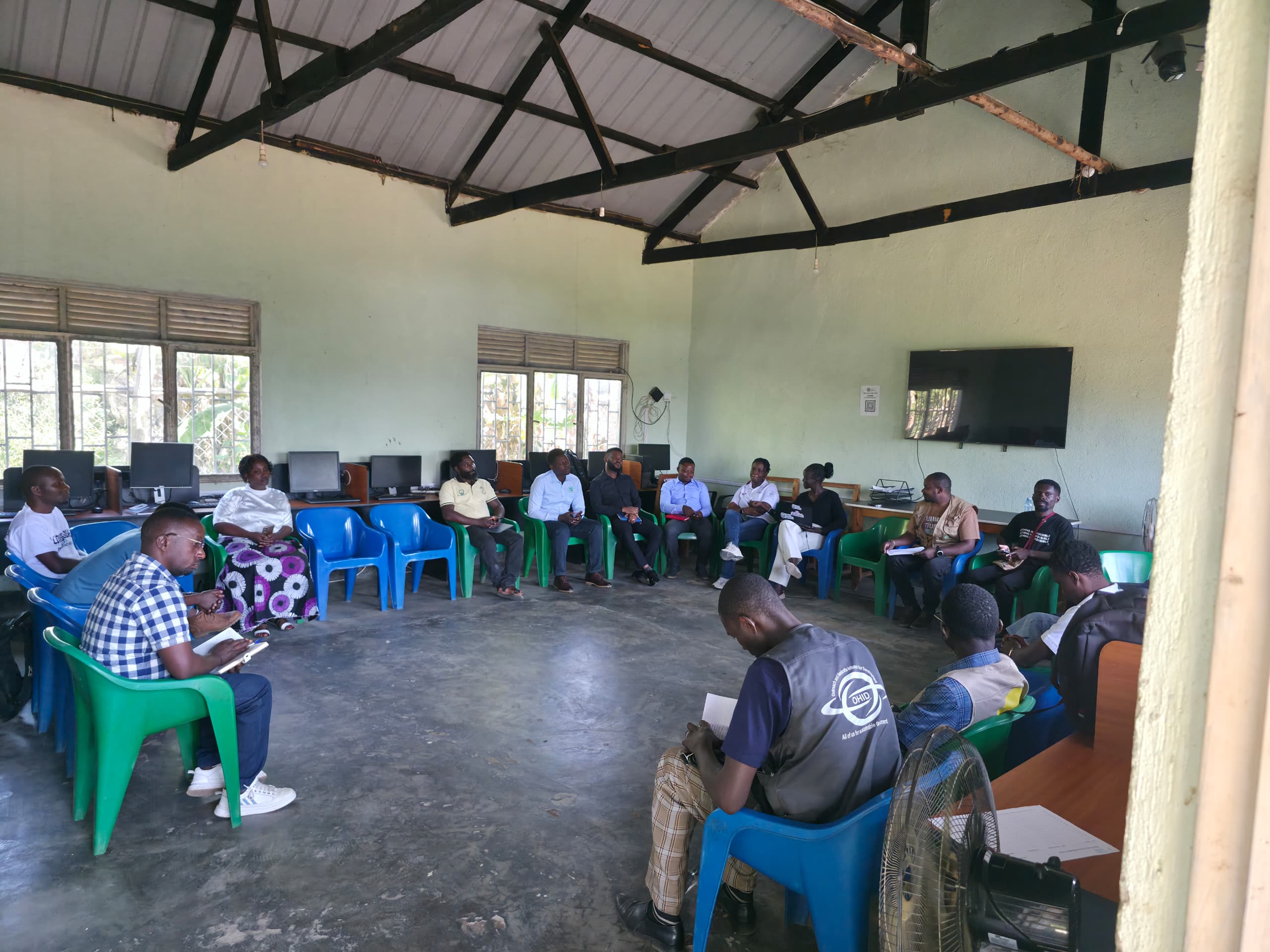
There was a feeling of moving from one settlement to another during my three days in West Nile. Rhino, Imvepi and Yumbe were no longer just names on a learning-visit itinerary anymore but they came to life, they were places where I sat with people, listened to their experiences and asked questions. Sometimes I did more listening than talking, and occasionally I found myself questioning some of the things I had come to believe about refugee-led organisations and the systems around them.
The landscape was different from what I am used to in Kakuma. Everything was greener. But beyond the physical difference, there was something familiar in the conversations. The organisations we met were dealing with questions that I encounter in my day-to-day engagement with RLOs in Kenya: how to sustain an organisation as it remains accountable to a community; how to build something that does not disappear when a project ends; and make sure refugees are not only subjects of development work but are actually shaping it. I had gone to Uganda to learn from partners. I did not expect to return with so many questions for myself and considerations for the wider ecosystems in which we work.
” In Kakuma, we talk a lot about meaningful refugee participation. Of course what can be defined as ‘meaningful’ is always relative. From my perspective meaningful participation must also include the ability to describe our own realities rather than only participating in programmes designed and explained by others. ”
The three days kept bringing me back to three simple reflections: Who tells our stories? Who owns the work? And what remains when the funding ends?
At Reliable Refugee Storyteller’s Association (RRSA), I was struck by their reflection on refugee storytelling. Too often, refugee stories are collected and told by others, sometimes to mobilise resources that do not result in sustainable change for the communities behind those stories. RRSA wants to change this by becoming a reliable refugee-led storytelling organisation that brings genuine community stories to communities, INGOs and donors. That stayed with me because storytelling is also about power. Who decides which story matters? Who gets invited to tell it? Who receives the resources mobilised through it? And how much control does the community have over how its reality is represented?, More questions.
In Kakuma, we talk a lot about meaningful refugee participation. Of course what can be defined as ‘meaningful’ is always relative. From my perspective meaningful participation must also include the ability to describe our own realities rather than only participating in programmes designed and explained by others. When refugee-led organisations tell their own stories they don’t simply improve communications they challenge the assumption that knowledge about refugee communities must first be interpreted and packaged by someone outside those communities. The people living the story should have a meaningful role in deciding how that story is told, shared and understood.
At Afri Youth Network, our conversation about decent livelihood opportunities and self-reliant communities raised another deeper brainstorming question for me: what does self-reliance mean for the organisation itself?
We often encourage refugee communities to become resilient and self-reliant, while the organisations closest to them operate through short funding cycles and restricted grants that make long-term planning difficult. An RLO may have strong community relationships and good ideas but still have little room to invest in its own systems because funding is tied mainly to donor obligations. This is why organisational sustainability cannot be separated from how funding is designed.
Women Concerns and Ideas showed me another possibility. Their journey from a VSLA group into a strong and inclusive organisation was fascinating because their sustainability strategy was not only something written in a document. You could see it in practice. Their journey reminded me that sustainability can begin with people organised around a shared need, saving together, building trust and gradually creating something stronger.
I left their space asking myself: What if, instead of always bringing sustainability strategies to RLOs from outside, we became better at recognising and strengthening the sustainability practices that communities are already building for themselves?
It also made me think about RLOs we work with in Kakuma, including Rafiki wa Mazingira and Farming and Health Education. There is an opportunity for organisations like these to learn directly from what Women Concerns and Ideas has built. Capacity strengthening should not always flow from an INGO, consultant or organisation with more resources to an RLO. There is knowledge between refugee-led organisations themselves that we need to value and create space for.
At Humanitarian Action for Refugees and Rural Communities Development (HARD), this question of sustainability became even more personal. Deep in the community, I saw trees that Cohere colleagues had planted during an earlier visit. Each colleague had planted one tree while working alongside HARD and community members. The trees were still there. They represented something simple but important about solidarity. Colleagues had not only come to observe, ask questions and leave. They had participated in something belonging to the community and left behind a small symbol that continued to grow.
HARD was also already discussing what would happen if donor funding stopped. This was a difficult but necessary conversation. A grant can help an organisation grow, but what is being built alongside that grant? Are we strengthening local relationships, community ownership, organisational systems and the confidence to continue when a particular funding stream ends?
An almost similar conversation emerged at CENET, we reflected on what genuinely being in solidarity with affected communities could look like. I appreciated this conversation because it brought the question back to us as partners: Are our intentions visible in the way we actually work with communities?
Systemic change cannot only mean asking RLOs to become stronger. It also requires funding and partnering with them to change.
We can ask RLOs to be sustainable, but we should also examine whether our funding systems allow sustainability. We can ask them to lead, but we need to examine whether decision-making spaces give them real influence. We can encourage communities to tell their stories, but we must be willing to listen when those stories challenge how we work.
When I left West Nile, I did not feel that I had collected three neat lessons to transfer from Uganda to Kenya. Instead, I carried back three other learnings:
Who owns the story? Who owns the work? And what remains when the funding ends?
The most valuable part of a learning visit is not always discovering something completely new. Sometimes another community gives you a different way of looking at questions you have been carrying for a long time.
If we want stronger, more self-reliant and genuinely community-owned organisations, we need to look beyond what they deliver today and pay attention to what they are building that can remain theirs tomorrow. And that may require changing not only RLOs, but also how we fund, listen, tell stories, build relationships and share power within the system.
Leave a Reply